
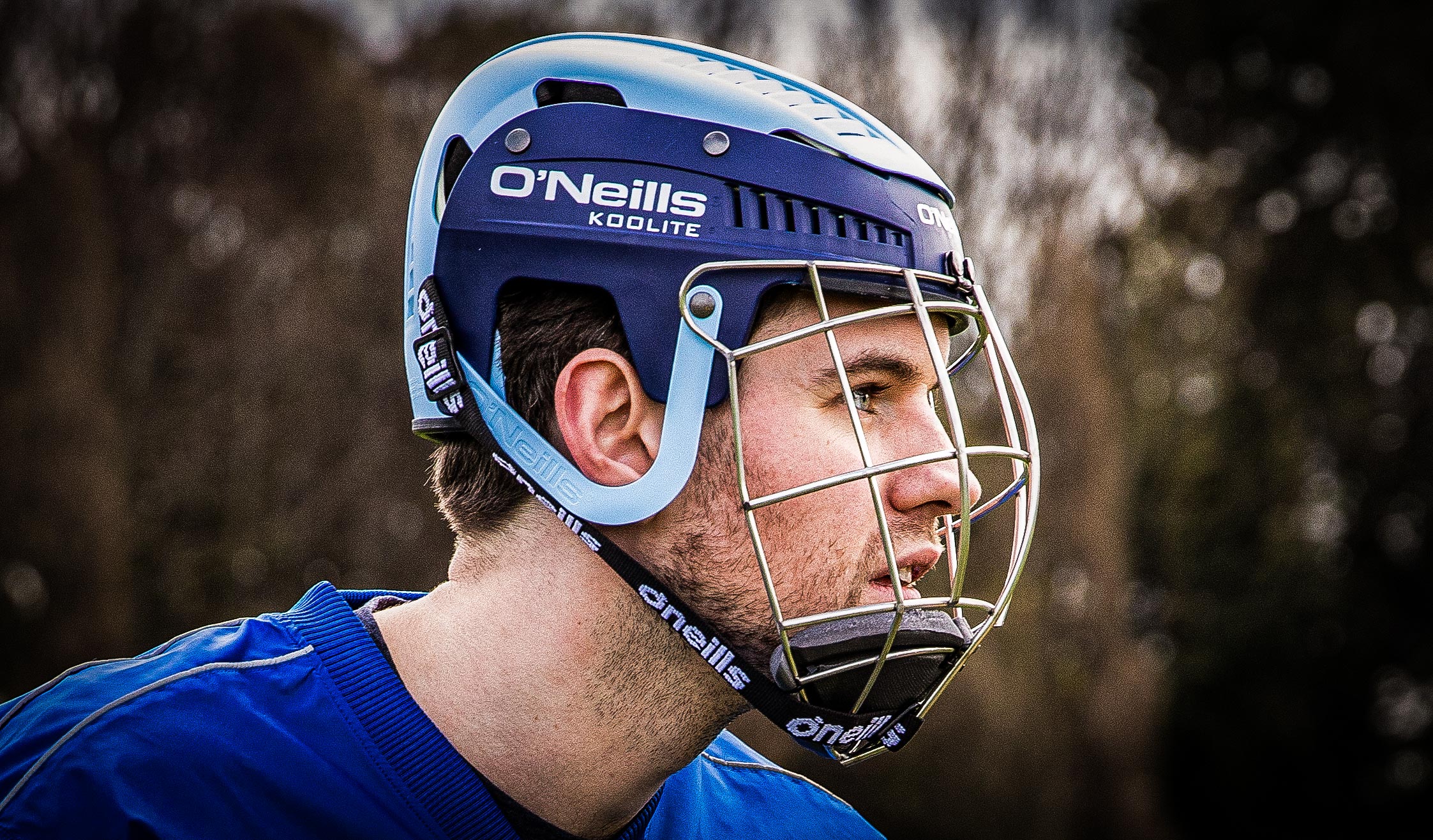
Soon there will be a generation of hurlers and camogs going through their careers that won’t remember the bare headed player. Hard to believe but it's true.
In both games of course up until relatively recent times, helmets were unknown. Players regularly got split open playing the game which added to its allure.
It wasn’t until 1967 when the helmet made its debut. A lad by the name of Micheal Murphy came on as a second half sub for UCC in a Cork County Final wearing a motorcycle helmet prompting a few raised eyebrows amongst the 12,500 souls watching the game. Murphy had sustained a fractured skull and, wanting to play in the match, had the ingenious idea to wear a helmet for protection. Nothing wrong with that we can say through the mists of time.
At the second time of asking in 1968 UCC’s motion to the Cork County Convention led to the matter being considered at the National Congress. From then onwards, players’ headgear was on the agenda.
Having been the man to get the ball rolling, Murphy continues to play a role in the tale. Again with UCC at the 1969 Fitzgibbon in Dublin, Murphy and seventeen teammates came equipped with ice hockey helmets he had imported.
Late the same year, Donal Clifford, a teammate of Murphy’s from UCC, was the first player to wear a helmet in a senior intercounty match when he donned the headgear in the National Hurling League Final. He subsequently reprised this role in the National League final, Munster Hurling Final and All Ireland Final.
In recent years the GAA took on board the view of the medical fraternity – and decreed that helmets would be compulsory.
Having said all of that we are spared the sight of the heroic hurler blood dripping head split marching off the pitch only to return minutes later, wrapped up like a Hammer House of Horrors Mummy ready to slash and burn all round him. He probably would have retired rather than wear a helmet.
Although there’s an argument that what thirty consenting adult males or females do on the pitch is their choice, barefaced hurler or camog is a thing of the past. Let’s celebrate it, and move on. Up with the Helmet!
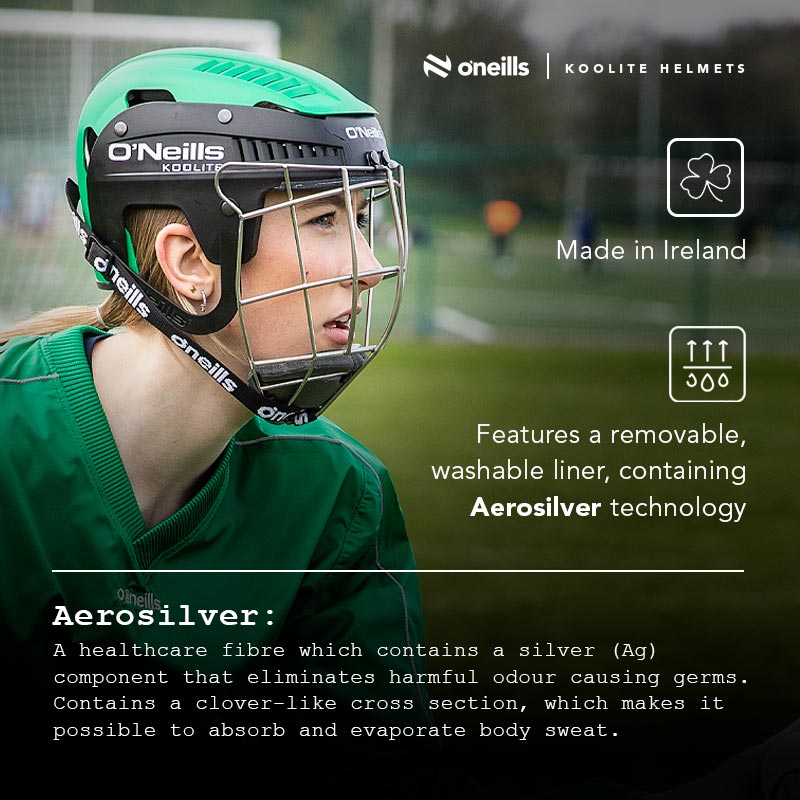
O’Neills Koolite Helmets
Our Koolite is proving more and more popular thanks to its high safety specification and the hygienic comfortable inner liner that can be removed and washed after matches and training.
Does the Koolite Helmet meet the GAA and camogie safety standards.
Yes the Koolite Helmet passes safety standard for hurling and camogie Helmets which is I.S. 355: 2006. The notified body is SP Technical Institute of Sweden.
Are all Helmets the same size?
No, Koolite Helmets come in four different sizes: Small, Medium, Large and Extra Large. To ensure the ideal fit you should try different sizes to get the Helmet that is comfortable on your head.
Can I remove some of the wires/bars on the Faceguard so I can see better?
You should not interfere with or remove the wires on the Faceguard. Doing so makes you more likely to sustain a facial or eye injury. It also renders the safety guarantee of the entire Helmet null and void. The Faceguard has been designed to protect you from impacts from approved Size 4 and Size 5 Official Sliotars.
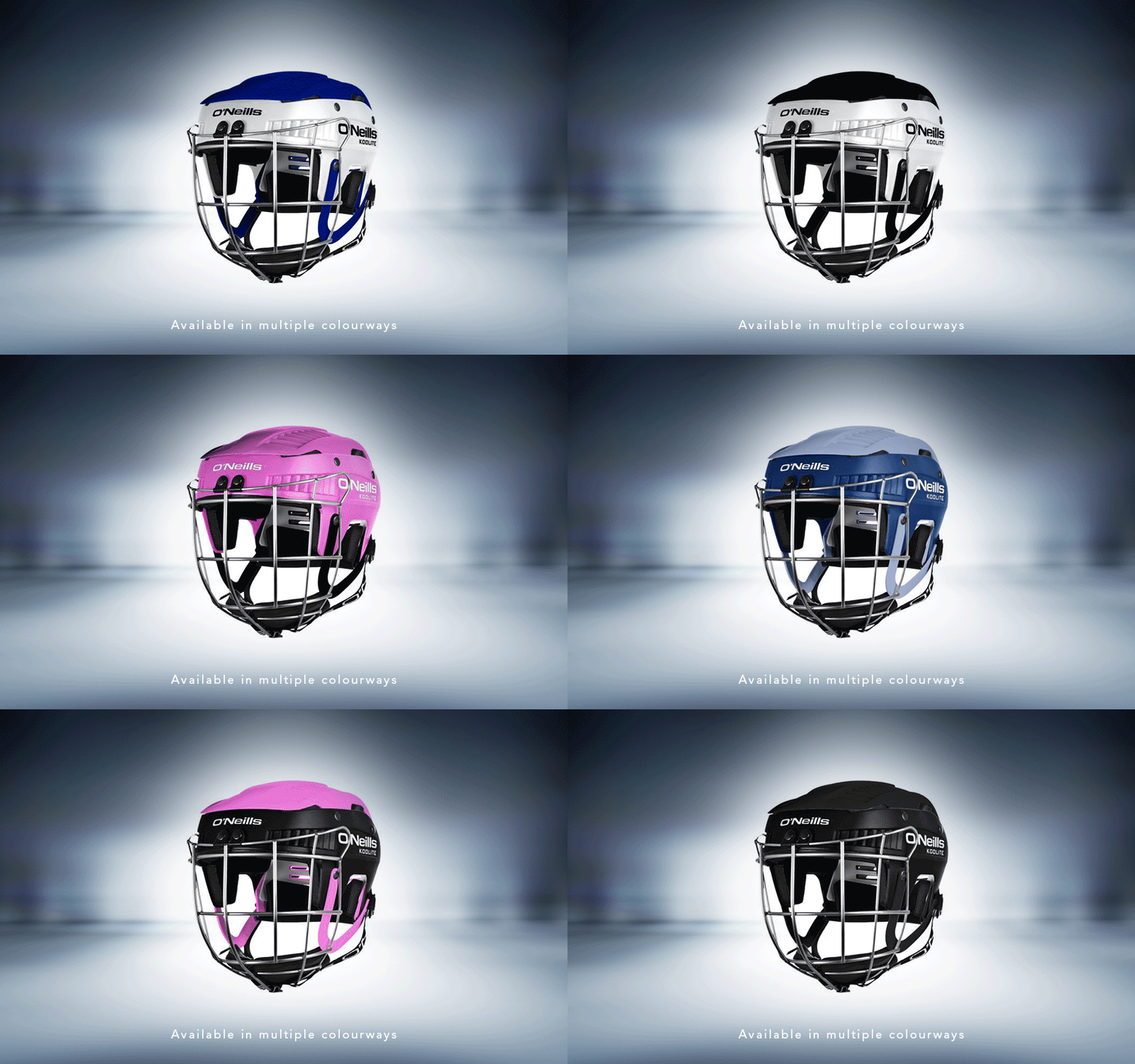
Can I get the Helmet in our Club Colours
Yes we can customise a Helmet in your club colours with your badge, the name of your club, your own name or whatever wording you choose.
Can I Wash the Helmet
Yes, you should wipe with a soft cloth and tap water only. The inner lining is removable and washable for better hygiene. This is particularly important if you perhaps lend someone your Helmet and wish to rinse it after use.
What Wording can I get on my Helmet?
We can place whatever wording you choose on the Helmet. We can also add your club, school or county badge and the Helmet can be produced in your club, school or county colours. You should not respray, laminate, lacquer or write on the Helmet yourself as this can compromise the plastic structure.
Can I remover the inner lining?
Yes the inner lining is designed to be removed for washing. This helps maintain the Helmet, it is design to be hygienic and keep the Helmet fresh. It also means in the event of blood injury the Helmet can be fully cleaned in line with regulations.
Discover More